Roger Federer Slower Courts Criticism Sparks Debate
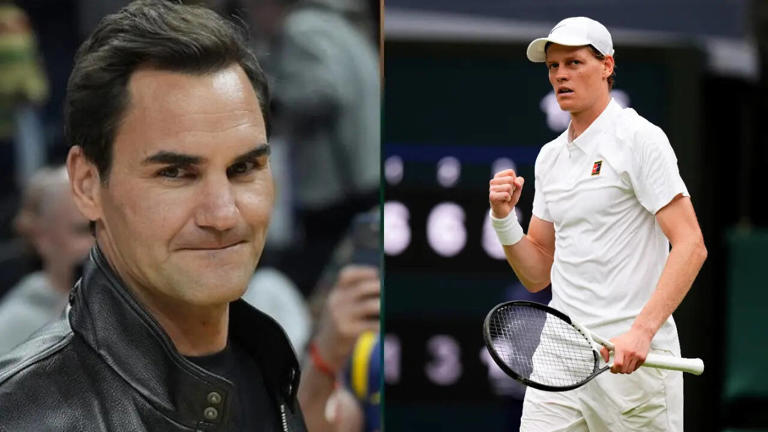
Roger Federer Slower Courts Statement Starts New Debate
The tennis world is buzzing after Roger Federer slower courts comments resurfaced this week. The 20-time Grand Slam champion criticized recent tournaments for deliberately slowing down court surfaces, claiming it gives an unfair advantage to players like Jannik Sinner and Carlos Alcaraz.
Federer shared his thoughts during a media appearance in Zurich, where he expressed concern that tennis is “becoming one-dimensional.” His statement has already sparked widespread discussion among fans, analysts, and former players.
Federer’s Argument on Court Speed
According to Federer, the Roger Federer slower courts issue is about preserving variety in tennis. He argued that fast courts once rewarded attacking players, while slower surfaces benefited baseliners — creating a balance of styles.
However, he believes modern tournaments have lost that diversity.
“Every court plays the same now — slower and higher bounce. It helps younger, powerful players but punishes creativity,” Federer explained.
He added that the game risks becoming repetitive if tournaments continue to prioritize long rallies over quick, tactical exchanges.
Who Benefits from Slower Courts?
When Roger Federer slower courts became a topic online, many pointed out that current stars like Sinner and Alcaraz thrive under these conditions. Both players rely on heavy topspin and exceptional movement, traits enhanced by slower surfaces.
In contrast, faster conditions — like those at Wimbledon in the early 2000s — favored serve-and-volley specialists such as Federer himself or Pete Sampras. Today, those playing styles are nearly extinct at the top level.
Federer’s comments reignited nostalgia among fans who miss the contrast between grass, clay, and hard courts. “Every match used to have its own rhythm,” one fan wrote on X (Twitter). “Now everything feels like clay tennis on hard courts.”
Reactions from Players and Experts
The Roger Federer slower courts discussion divided the tennis community. Some agree with Federer’s perspective, while others argue that slower courts make rallies more exciting for viewers.
Former player Mats Wilander supported Federer, saying,
“He’s right. Tennis used to reward different skill sets. Now, it’s mostly about power and consistency.”
However, current ATP star Carlos Alcaraz respectfully disagreed, stating that “the modern game demands fitness and intelligence,” and that slower courts give players more tactical options.
The ATP has not officially responded, but several tournament directors hinted that changes in surface speed are often made to increase match duration and broadcast value.
Impact on Future Tennis
If tournaments continue adjusting surface speeds, the concerns raised by Roger Federer slower courts may shape future ATP policies. Some fans and coaches are calling for standardized surface regulations to preserve variety in playing styles.
Federer’s influence in tennis remains strong, even in retirement. His comments could encourage dialogue between organizers and players about restoring more balanced conditions.
In addition, coaches argue that varied surfaces develop more complete athletes. “A player who adapts to all conditions becomes truly great,” said former coach Paul Annacone.
The Legacy of Federer’s Philosophy
For Federer, the issue goes beyond nostalgia. His career was built on adaptability — mastering grass, hard courts, and even clay. The Roger Federer slower courts statement reflects his desire to protect the sport’s artistic side, not just its athletic one.
He concluded his interview with a simple reminder:
“Tennis is beautiful because it’s different everywhere. Let’s keep it that way.”
Final Thoughts
The debate around Roger Federer slower courts has exposed one of tennis’s ongoing tensions — tradition versus entertainment value. While modern fans enjoy long, intense matches, legends like Federer advocate for balance, speed, and creativity.
Whether or not tournaments will listen remains uncertain. Yet one thing is clear — Federer’s voice still carries enormous weight. His words continue to shape conversations about how tennis should evolve in the years ahead.
Post Comment