Amasya Travel Guide 2025 – Rivers & Rock Tombs
The City of Kings and Rivers
The Amasya Travel Guide 2025 takes you to one of the most picturesque and historic cities in northern Turkey.
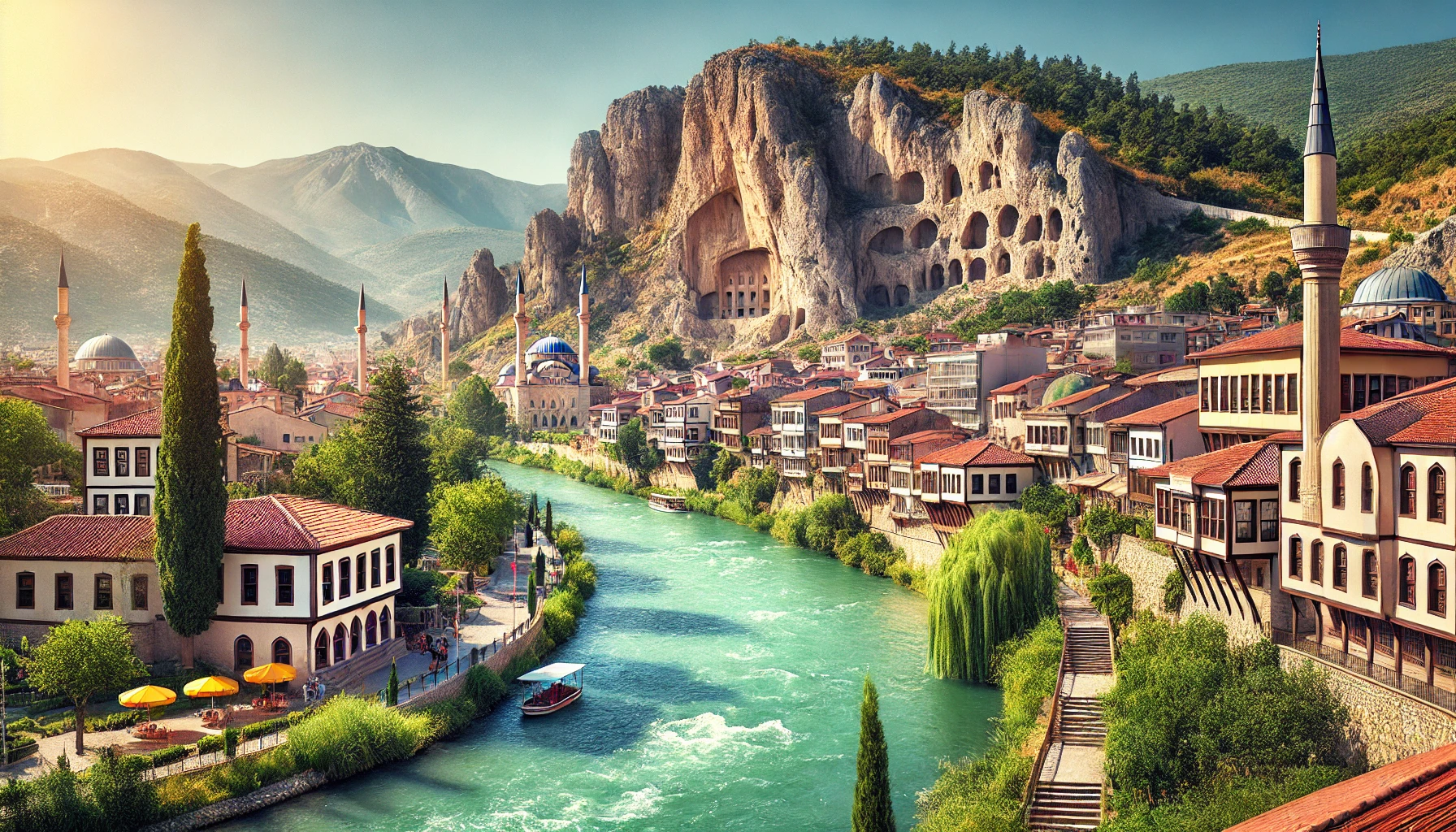
Located in a narrow valley along the Yeşilırmak River, Amasya is famous for its white Ottoman mansions, dramatic cliffs, and ancient tombs carved into the rock above the town.
It’s a city where history flows with the river — calm, beautiful, and full of stories.
Where History Meets Nature
The Amasya Travel Guide 2025 begins with the setting — a breathtaking landscape of mountains and water.
The city’s origins date back more than 3,000 years, once home to Pontic Kings, Romans, and Ottomans.
The rock tombs of the Pontic Kings are carved directly into the cliffs overlooking the river, creating one of the most impressive sights in Turkey.
At night, the tombs are illuminated, glowing above the city like ancient guardians.
Below, along the riverbank, rows of restored Ottoman houses with red roofs and wooden balconies reflect beautifully in the water — a scene that feels straight out of a postcard.
Top Sights in Amasya
The Amasya Travel Guide 2025 highlights must-see places that blend culture, history, and nature:
- Pontic Kings’ Rock Tombs: The city’s most iconic attraction, reachable by stairs carved into the mountain.
- Amasya Castle: Offering panoramic views of the valley and the Yeşilırmak River.
- Hatuniye Mahallesi: The old neighborhood with riverside Ottoman houses turned into boutique hotels and cafés.
- Hazeranlar Mansion: A museum inside a 19th-century Ottoman house, showing traditional life and design.
- Amasya Archaeological Museum: Exhibiting mummies from the 14th century and artifacts from ancient civilizations.
- Sabuncuoğlu Medical Museum: Dedicated to Amasya’s famous 15th-century doctor, showcasing old surgical tools and manuscripts.
Each corner of Amasya feels alive with history — yet peaceful and timeless.
The Riverside Charm
Amasya’s beauty truly shines along the Yeşilırmak River.
Bridges connect both sides of the city, while riverside paths are perfect for evening walks under the lanterns.
Cafés and restaurants line the water, serving tea and Turkish desserts with views of the illuminated tombs.
You can even stay in a restored mansion by the river — waking up to the sound of water and birds.
Local Cuisine and Flavors
The Amasya Travel Guide 2025 wouldn’t be complete without mentioning the food.
The city is famous for its Amasya apples — sweet, crisp, and symbolic of the region’s fertile valley.
Other local specialties include:
- Keşkek: A slow-cooked dish made from wheat and meat.
- Toyga Soup: A traditional yogurt-based soup with herbs.
- Baklalı Dolma: Vine leaves stuffed with fava beans.
You’ll find many small family-run restaurants offering authentic Black Sea–Anatolian flavors.
Culture and Festivals
Amasya is also known as the city of princes, where many Ottoman sultans once served as governors before becoming rulers.
This royal legacy is celebrated with festivals and cultural events every year.
The Amasya International Culture and Art Festival, held every June, features traditional music, dance, and historical reenactments along the river.
Where to Stay
The Amasya Travel Guide 2025 suggests:
- Sehri Zade Yalisi: Riverside hotel with Ottoman-style décor.
- Simre Hotel: Modern comfort near the city center.
- Ilk Pansiyon: Cozy and affordable, in the heart of the old town.
Many hotels are renovated Ottoman houses, offering both authenticity and comfort.
Getting There
Amasya is easily accessible from Samsun Airport (130 km) or Ankara (340 km).
You can reach it by bus, train, or car. The scenic road passes through valleys and rivers — perfect for a road trip.
Final Thoughts
The Amasya Travel Guide 2025 reveals a city that feels like a painting — where history and nature flow side by side.
From ancient tombs in the cliffs to peaceful riverside walks and Ottoman mansions glowing in the evening light, Amasya offers travelers a rare combination of culture, beauty, and tranquility.
It’s a hidden gem in northern Turkey — quiet, majestic, and unforgettable.
Post Comment